Finishing Up the Coreless Motor
First, some photos taken with one of Bayley's magical cameras:
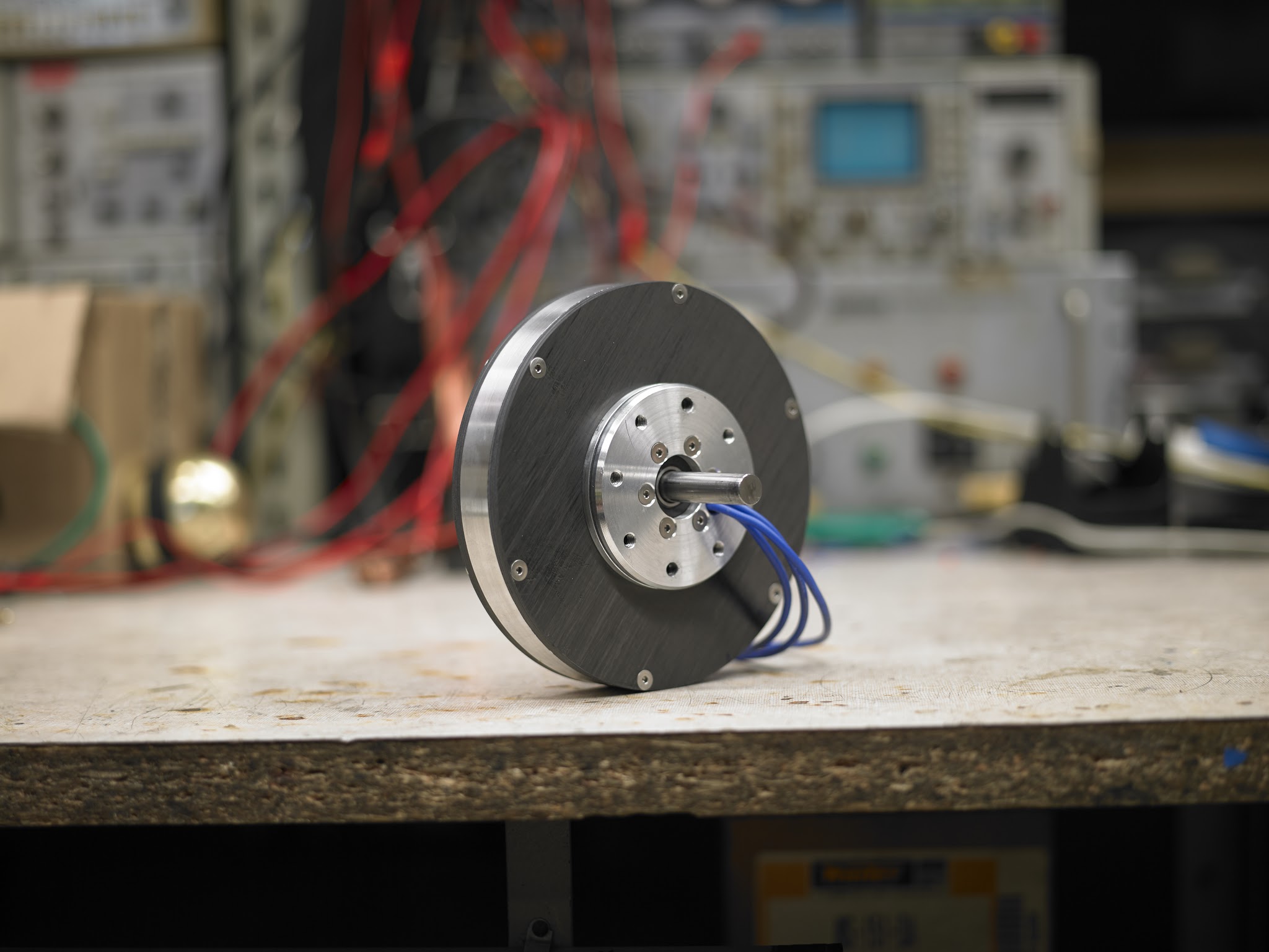
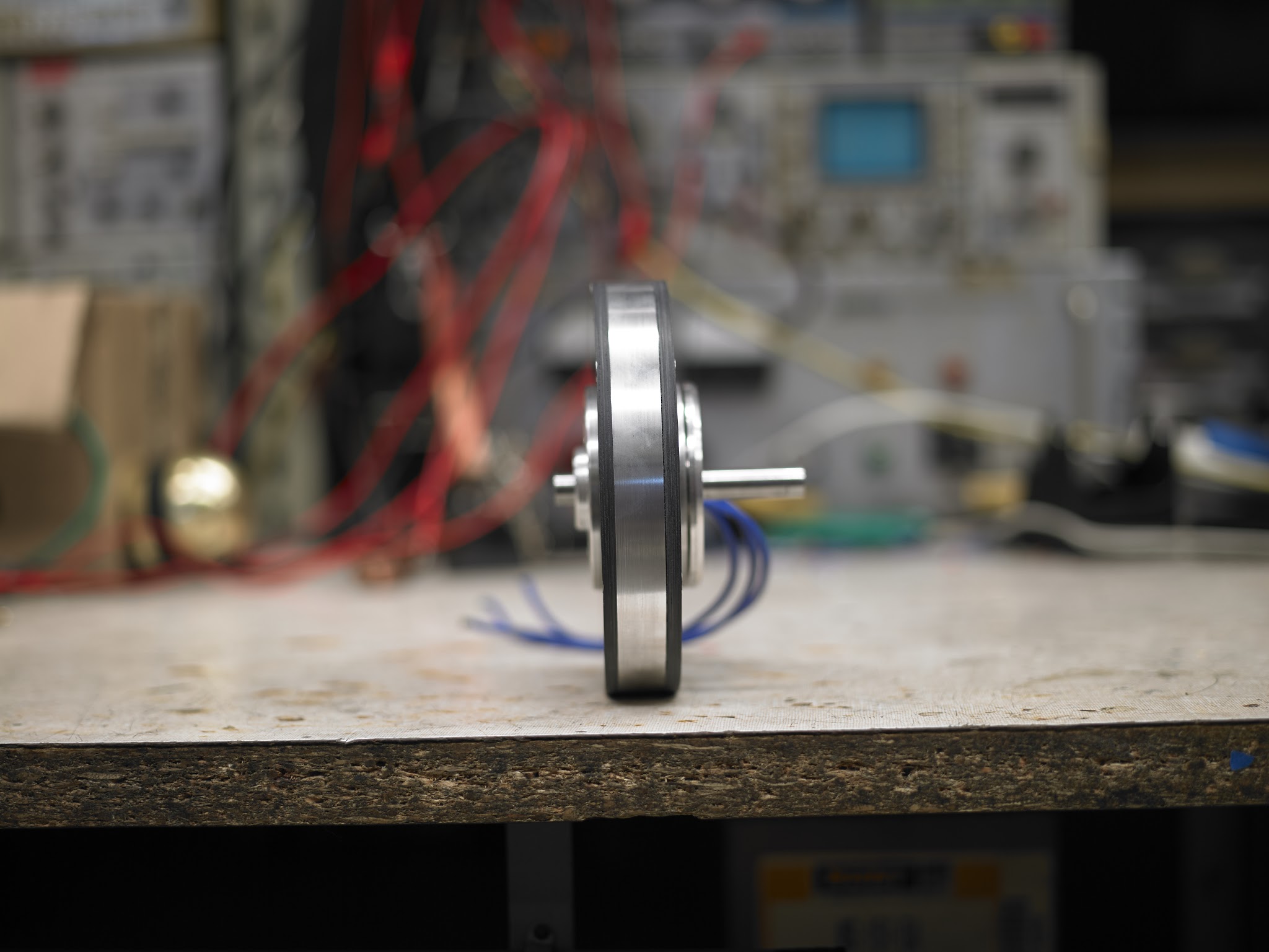
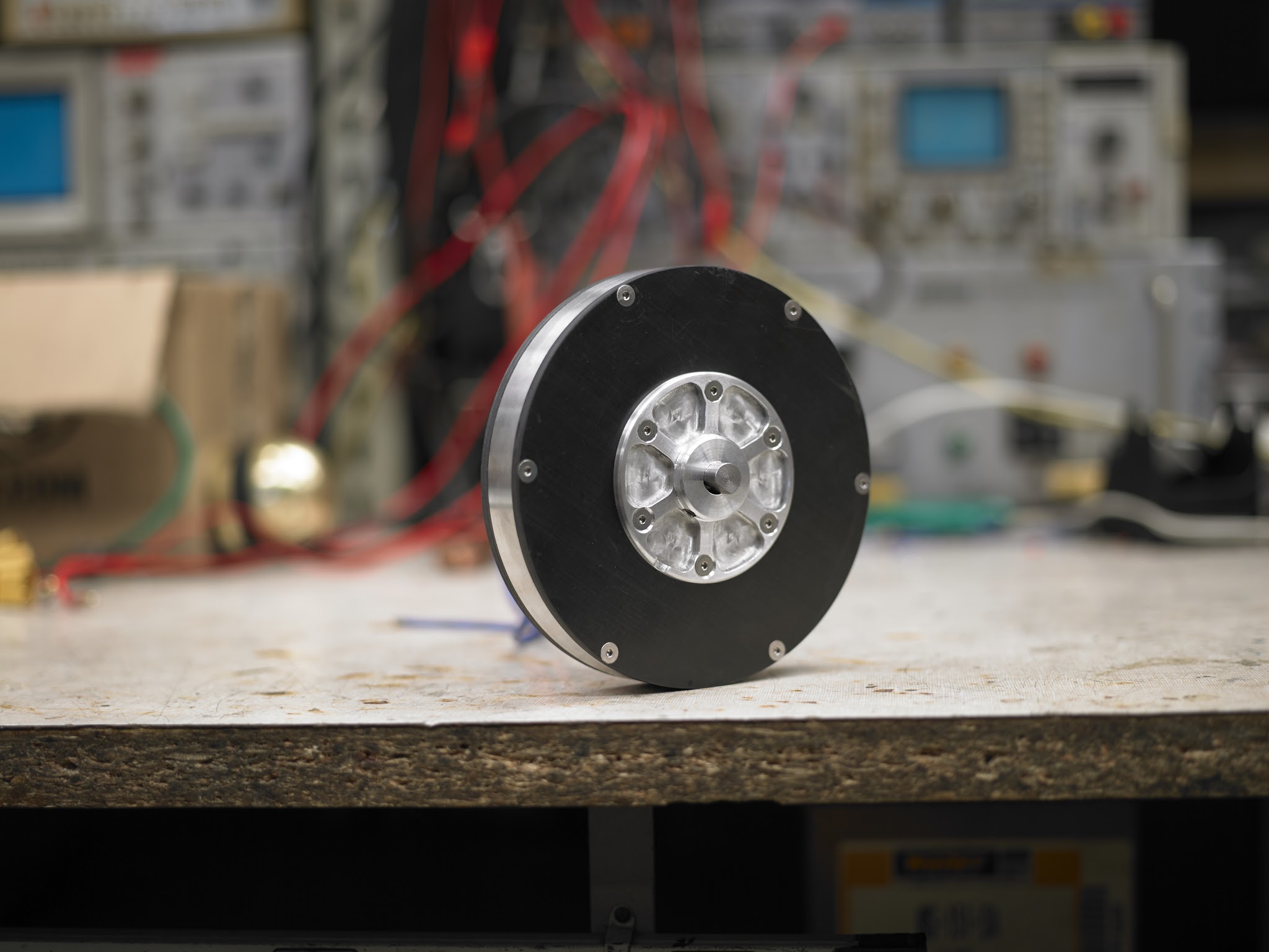 |
| Sorry I didn't focus it well enough to achieve the full 25 megapixels of resolution, Bayley |
After last round, the only thing left to make was a ring to separate the two halves of the rotor. I CNC milled these two rings out of solid 10mm plate, using a 1/8" carbide endmill. (Very) Subtractive manufacturing for the win.
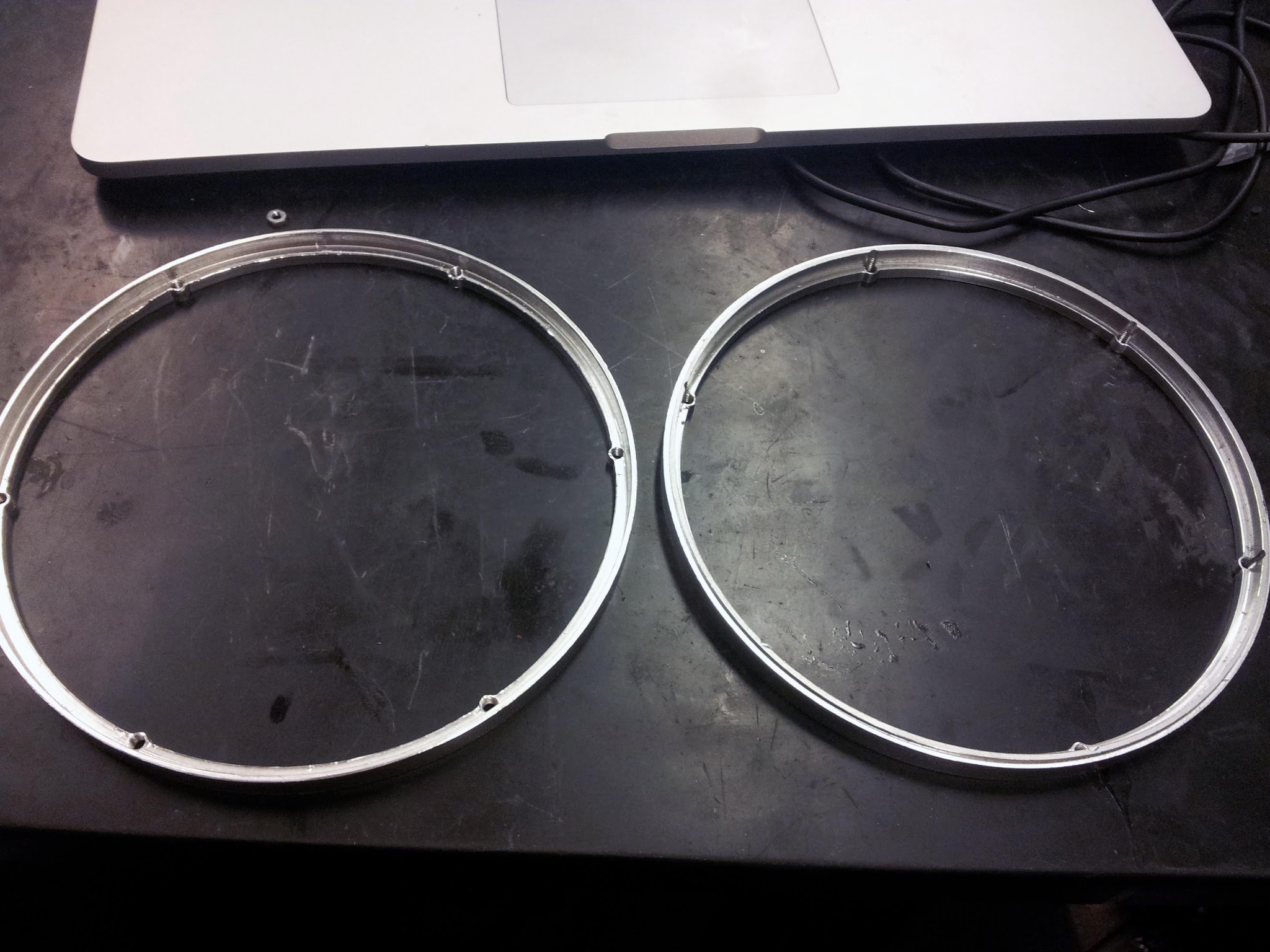
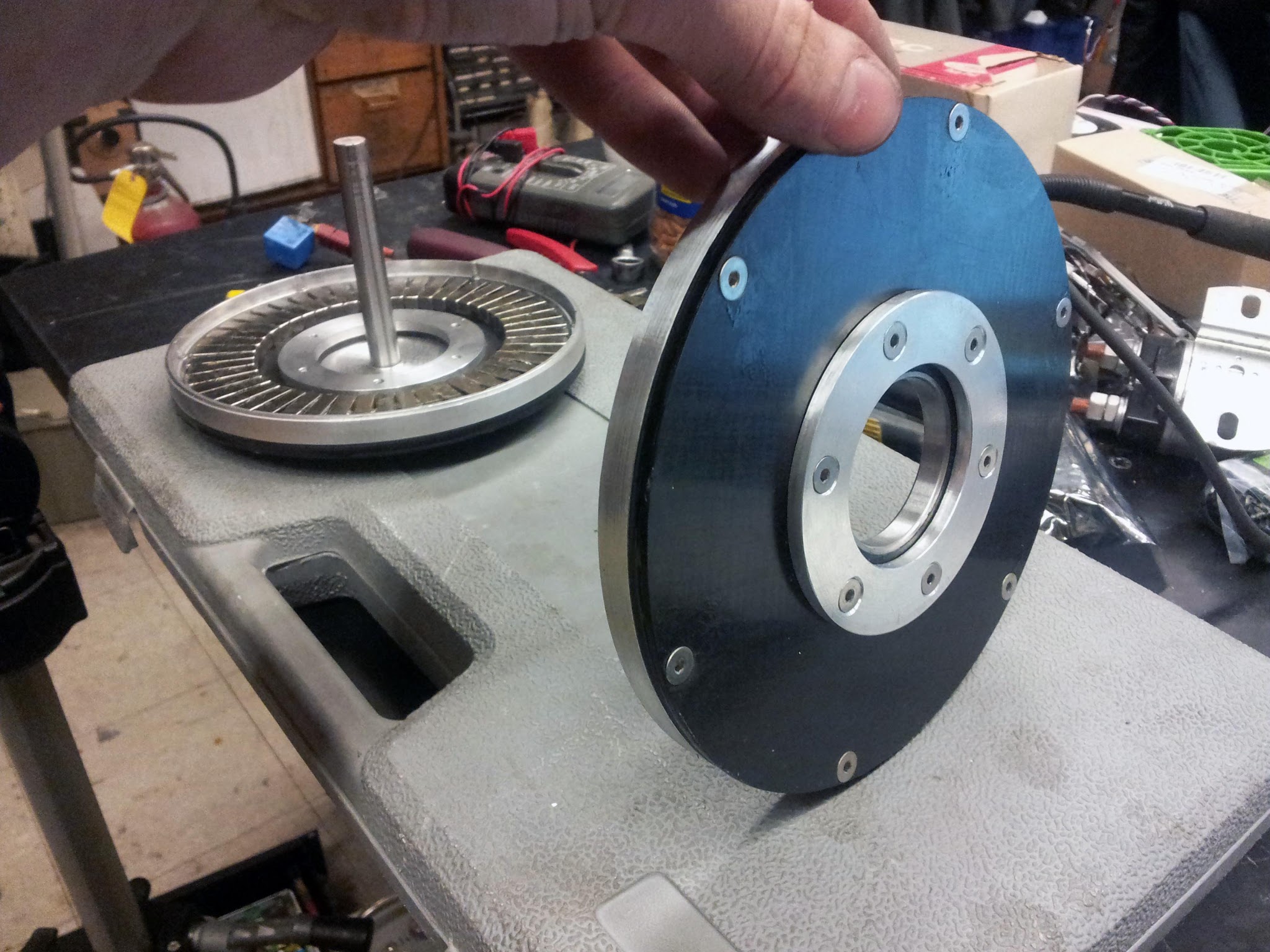
As you can see here, I really didn't leave much clearance room around the stator. If I had made the motor any bigger, however, it would have been too large to machine on the MITERS CNC mill, which is limited to 7" of Y-axis travel.
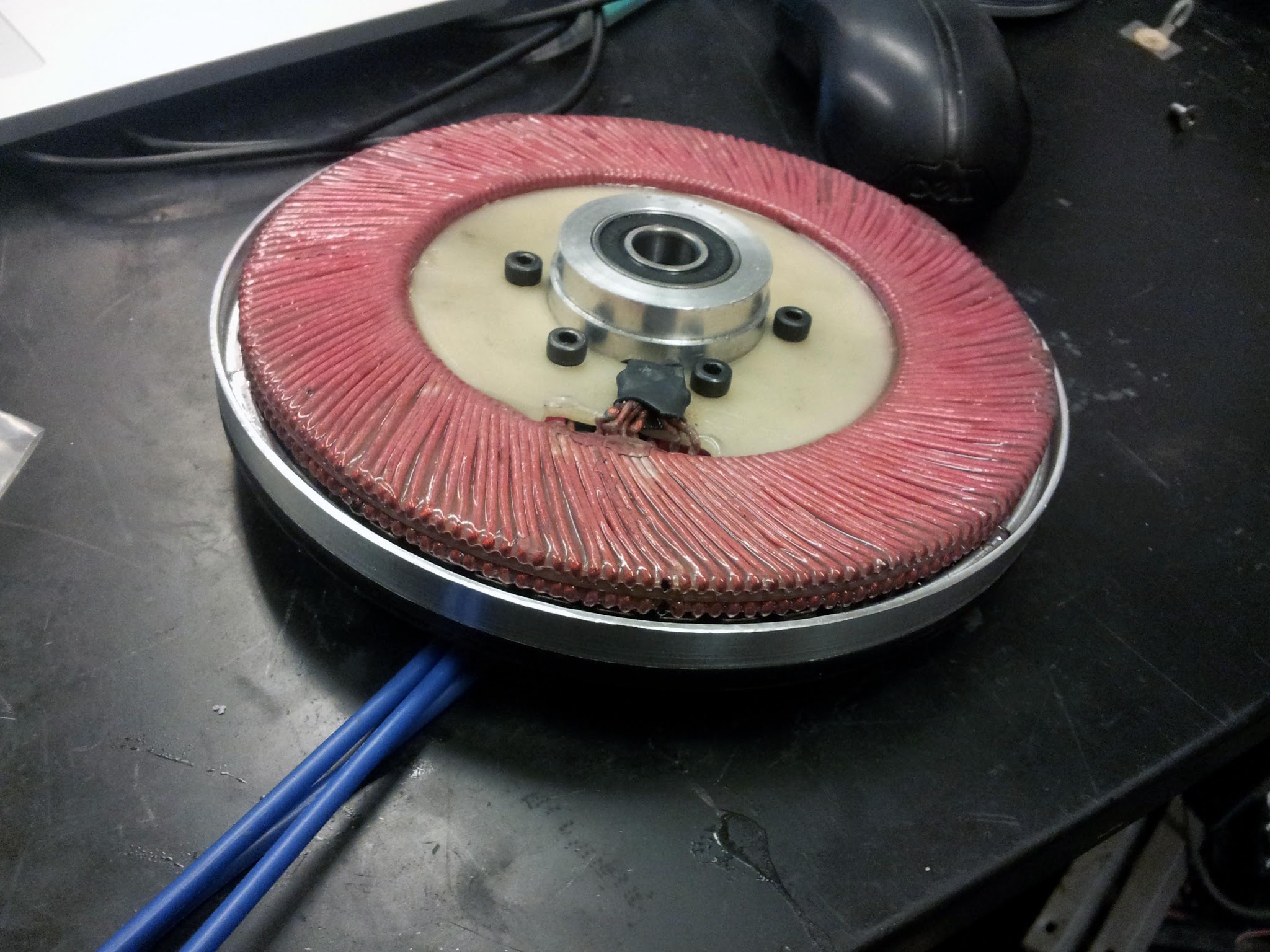
A problem with the stacked-parallel-plates construction is that it is really hard to actually get the stacked plates completely parallel. I spent way too long trying to get rid of the little bit of skew between the two halves of the rotor. I was able to make it acceptable, but not nearly as perfect as I would have liked.
As predicted, with both halves of the rotor installed, the circulating-current drag I noticed before disappears. Here's the motor spinning up at 24 V on a generic hobbyking airplane controller:
At full speed on 24 volts, the motor draws 2.4 amps. Not too bad, really. The spin-down time is satisfyingly long as well.
Drill-scoping across the leads put the motor at 97 rpm/volt, which is a bit higher than I expected. Maybe the lost torque constant comes from my modeling of the motor about its average radius, or the magnets being a bit weaker than FEMM thought. Still, not too bad for a first try. If I could figure out how to easily wind it with wire, moving to a more Servodisc-style winding pattern could give a pretty decent bump in torque constant while still allowing the stator to be constant thickness.

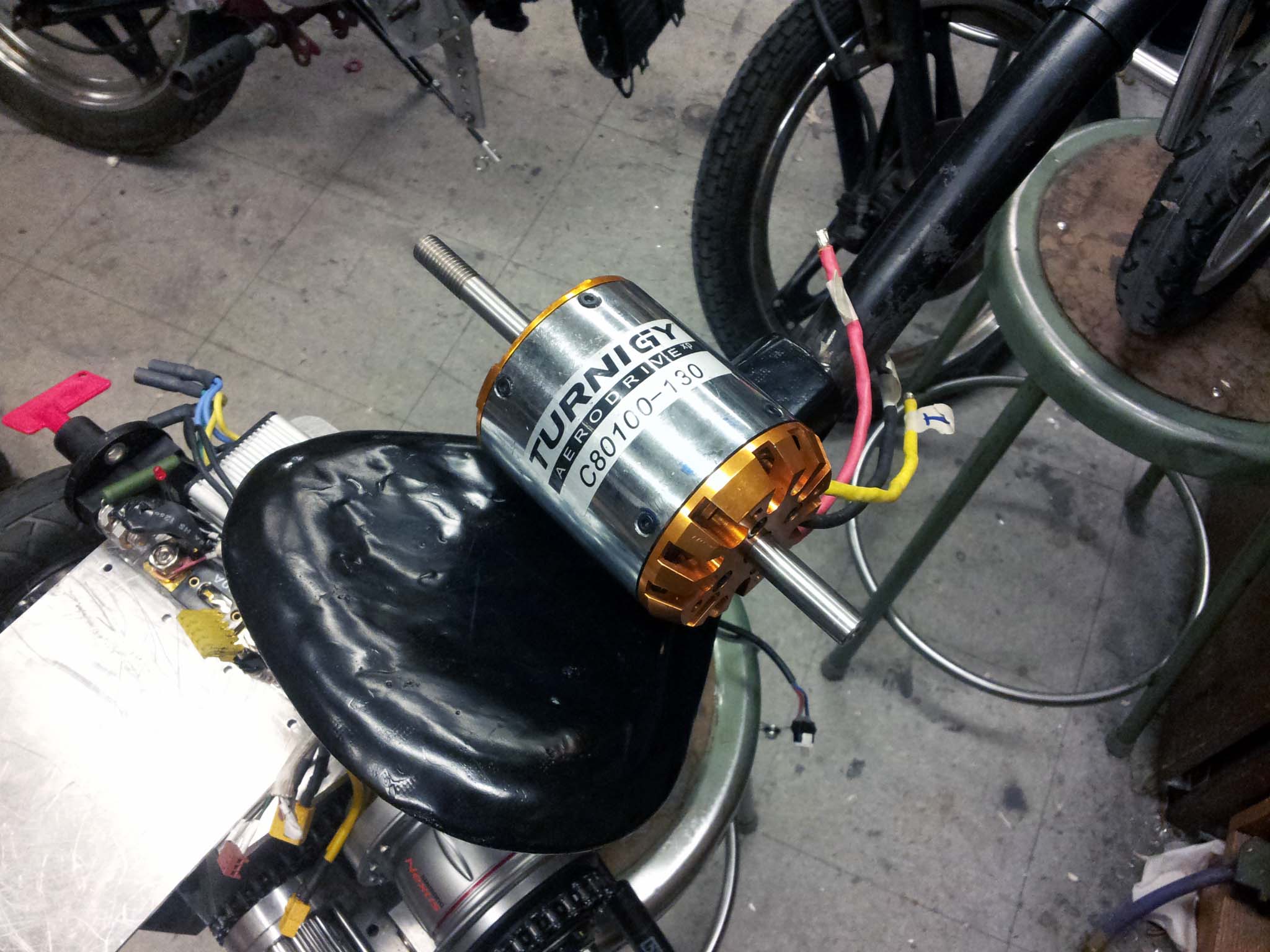
Line-to line resistance is 100 mΩ, or 50 mΩ per phase. So in terms of motor constant (Kt/√resistance), this thing comes a bit ahead of the venerable 80-100 "Melon" airplane motor. I just measured one of the 170 rpm/volt flavor at 50 mΩ line-to line. Realistically, in its current form it's probably very thermally limited, but this is still a pretty sweet result. Now I just need to find some derpy vehicle to attach it to.
Comments